SHOPPING CART
No products in the cart.



A changing bag is one of those things where the best system often develops only through use. At first, we pack almost half the nursery just in case, but after a few months we already know what we really need for a short walk and what we need for a full day out.
A well-prepared changing bag should always contain the basic essentials for changing, spare clothes, a muslin cloth and something for unexpected situations. As your child grows, the contents change – bottles are joined by snacks, bibs, cutlery and perhaps a food jar.
But the contents are not the only thing that matters. The right bag size, enough pockets and the way you carry it can determine whether you can find the wipes with one hand during a nappy change or whether you first have to empty half the bag.
The basic contents are quite simple:
For a longer outing, it makes sense to add more nappies and spare clothes, food, drinks and something for yourself as well. The amount you pack should depend on how long you will be away from home. You do not need the same supplies for a 30-minute walk around the neighbourhood as you do for a full day out.
When changing your baby away from home, what matters most is having everything you need within easy reach. Nappies, wipes and a changing mat are not things you want to be searching for at the bottom of a full bag. A foldable changing mat is particularly practical because it takes up little space and allows you to change your baby even when the available surface is less than ideal.
At least one spare set of baby clothes is almost essential. Spit-up, a leaking nappy or food can quickly lead to an unexpected change of clothes. For a younger baby, a spare bodysuit and trousers or a sleepsuit will usually be enough. For a longer outing, it makes sense to add socks and, depending on the weather, an extra layer of clothing.
And there is one thing we often only think of after the first mishap: a spare top for mum. It can be especially useful while breastfeeding because of leaking milk or spit-up. Even later, part of your child’s lunch can easily end up on the parent rather than in the child’s mouth.
A muslin cloth deserves a place in the bag almost regardless of your child’s age. You can use it during feeding, for spit-up, as a shoulder cover, as an extra layer on the changing mat or simply as a cloth whenever you need one. Instead of carrying several different items, you have one lightweight and versatile piece with you.
The best changing bag is not necessarily the biggest. What matters more is that it suits your lifestyle and your child’s age. The same solution is unlikely to be the most practical throughout the entire period.
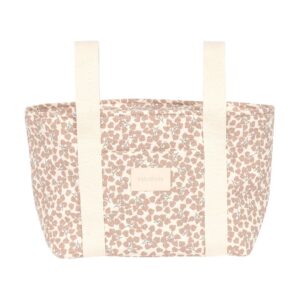
For shorter walks and errands, a smaller organiser that attaches directly to the stroller may be enough. You can keep a few nappies, wipes, a dummy, a muslin cloth and other smaller essentials in it. Its main advantage is that everything is within easy reach and you do not have to carry an additional large bag.
An organiser can also be practical as an addition to a larger bag – keep the things you use most often in it while everything else stays in the main bag.
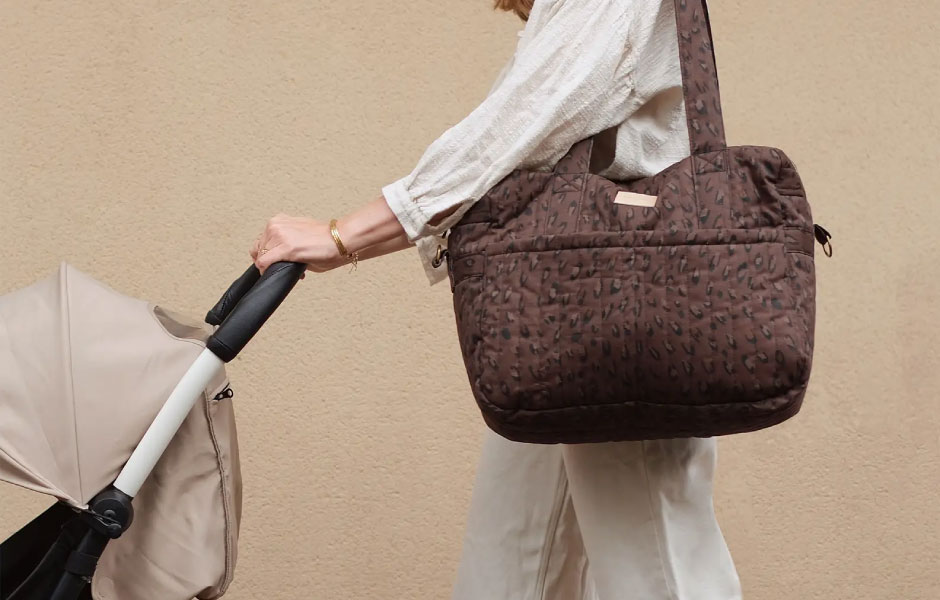
A classic bag is a good choice especially when you want a little more space and clear organisation.
When choosing one, look for:
With pockets, it is not only the number that matters. It helps if everything has its own regular place. If you always know which pocket holds the dummy and where the wipes are, you will appreciate it most when your other hand is already full.
As your child gets a little older, your needs may change too. Food, drinks, snacks, a toy, more spare clothes and other small items find their way into the bag. At the same time, your child becomes increasingly mobile.
That is when having both hands free can become more important than anything else.
I also switched from a changing bag to a backpack after around eight months. I needed to carry more and more things with me, while a backpack was simply more practical with a more active child.
So when buying a changing bag, you do not have to look for one solution that will be perfect from birth until the age of three. A family’s needs change – and the bag can change with them.
A large bag without a system can quickly become a black hole. The easiest approach is to group things according to how they are used:
Changing: nappies, wipes, changing mat, cream and bags.
Clothes: a spare set and a muslin cloth.
Feeding: bottle or cup, bib, spoon, food or a snack.
Within easy reach: dummy, wipes, phone, keys and other things you often need.
You can also keep spare clothes in a smaller washable bag. If you need to use them, the wet or dirty set can then go into the same bag, keeping the rest of the changing bag clean.
When you get home, replace used items as soon as possible. Add fresh nappies, check the wipes, replace a dirty muslin cloth and put the spare bodysuit back.
Next time you leave, you will only need to add things that do not make sense to keep permanently in the bag, such as food and drinks. It is one of those small habits that can make leaving the house considerably less chaotic.
If your baby is formula-fed, a well-prepared changing bag can be particularly practical. Along with a sterilised bottle, you can take a measured amount of infant formula and a vacuum flask with hot, previously boiled water so that you can prepare a fresh feed when your baby needs it.
When you begin introducing solid foods, the changing bag gradually gains some new contents.
Along with the basic changing essentials, it is useful to have:
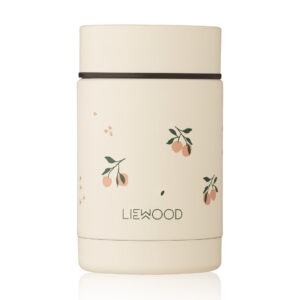
And this is where an item you might never have associated with a changing bag when your baby was a newborn becomes particularly useful: a food jar. If your child is already eating prepared meals, it allows you to take a warm home-prepared meal with you. This means you do not have to depend on having somewhere to reheat food while you are out.
An insulated bottle for drinks can be just as practical, especially on longer journeys. With a slightly older child, the question often stops being what else should I add? and becomes how to fit everything into the bag without carrying unnecessary weight.
Adjust the contents of your changing bag according to how long you will be away from home. For a short walk or a quick errand, two or three nappies, a small pack of wet wipes, a changing mat, a muslin cloth, a spare bodysuit or set of clothes and a bag for dirty items are usually enough. If your child uses a dummy, add that too, along with whatever you will actually need for feeding while you are away.
For a longer outing, it makes sense to increase the basic supplies slightly. Add more nappies, extra spare clothes, another muslin cloth and a spare dummy. If you will be out during mealtimes, remember food and drinks, a bib, cutlery and, depending on your child’s age, a food jar or other feeding essentials. A spare top for the parent can also be useful – particularly while breastfeeding or with a younger baby who often spits up.
With a well-organised changing bag, it is often not the big things that matter most, but the details:
A smaller pack of wipes instead of a large one saves a surprising amount of space.
A spare dummy is barely noticeable until the first one falls on the floor or disappears without a trace.
A bag for wet clothes prevents one accident from making the entire contents of the bag dirty.
An external pocket is ideal for things you want to find immediately.
A muslin cloth can perform five different jobs in a single day.
A food jar, once your child starts eating solids, can mean that their usual meal can come with you even when you are far from home.
These are details that are difficult to judge when buying your first bag, but in everyday use they can quickly become more important than how the bag looks.
There is no universal list that works for every family. An exclusively breastfed baby needs different things when out and about than a formula-fed baby. A six-month-old who is starting solids needs different equipment from a toddler who already eats snacks independently. Even a half-hour walk requires different preparation from a full day out.
The same applies to the bag itself. Some people will prefer a small stroller organiser, others a spacious shoulder bag and others a backpack. A good changing bag is not one that contains everything. A good changing bag contains what you need – and lets you find it when you need it.
With a few basic essentials, thoughtful organisation and a little experience, leaving the house with a baby becomes much simpler. And when your needs change, simply adjust the contents – or the bag.