SHOPPING CART
No products in the cart.



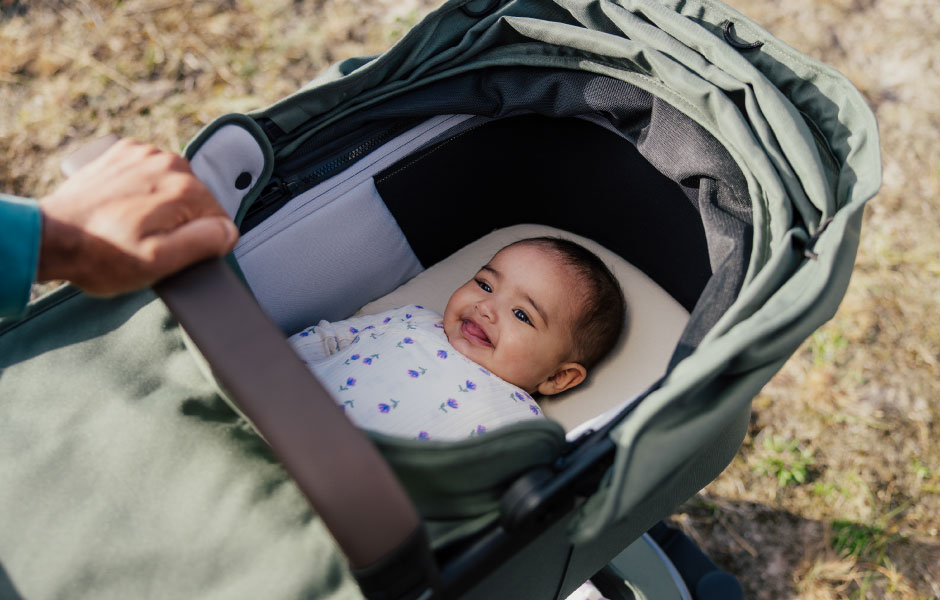
During the first few months, the carrycot is a comfortable place for your baby to lie down and rest during walks. But as your little one becomes more curious, starts lifting their head and taking an interest in the world around them, many parents begin to wonder whether it is time to switch to the stroller seat.
Moving from the carrycot to the stroller seat does not depend on your baby’s age alone. Their motor development, size and, above all, the stroller manufacturer’s recommendations also play an important role.
Many stroller carrycots are designed for use from birth until approximately six months of age. However, this is only a general guideline, as babies develop at different rates and individual carrycots have different limitations.
When using a carrycot, it is important to consider:
With the Joolz Day5 and Geo5 strollers, the maximum permitted weight in the carrycot is 9 kg. However, use must stop earlier if your baby can sit up unaided, roll over or push themselves up onto their hands and knees.
This means your baby may reach the carrycot’s developmental limits before reaching its maximum weight.
Parents often notice that their baby becomes increasingly interested in their surroundings during walks. They lift their head, turn towards sounds and want to see what is happening around them.
These are normal developmental signs, but curiosity and good head control alone do not necessarily mean that your baby is ready for the stroller seat.
When considering the transition, pay attention to:
For the Joolz Day5 and Joolz Geo5, the stroller seat is designed for children aged six months and older. Even if your baby has good head control at five months and is eager to explore their surroundings, this does not mean they can already use the stroller seat on these two models.
This is one of the most common questions parents ask when considering the transition to a stroller seat.
The answer depends on the stroller’s design and the manufacturer’s instructions. Some stroller seats are intended for babies who can already sit independently, while others are specially designed to be used earlier.
It is important to know that a baby does not necessarily need to have fully mastered independent sitting before using a stroller seat. Much depends on the seat’s design, available recline positions and the manufacturer’s recommendations.
With the Joolz Day5 and Geo5, the stroller seat is intended for babies aged six months and older. At that stage, an appropriately adjusted backrest can provide a comfortable and safe position, even if your baby is still learning to sit independently.
Babies grow and develop at different rates, so some may outgrow their carrycot a little earlier. It is not only their size that matters, but also their motor development.
If your baby reaches the carrycot’s limits before they are old enough for the stroller seat, first check whether the manufacturer offers another suitable solution for your particular model. This might be a specially approved lie-flat attachment or another appropriate stroller configuration.
If no such option is available, you could choose another stroller suitable for younger babies during this transitional period. The important thing is to consider your baby’s age, development and the manufacturer’s instructions.
Once your baby meets the requirements for using the stroller seat, the transition can be gradual.
During the first few walks, pay attention to a few important details.
For a younger baby, use the position recommended by the manufacturer for their age and developmental stage. The most upright position is not necessarily the most suitable.
The harness should be adjusted to your baby’s size and fitted according to the manufacturer’s instructions. Your baby should always be properly secured in the stroller seat.
Your baby should be comfortably and securely supported. If their head noticeably flops or their body slides into an unsuitable position, check the seat adjustment and whether the seat is appropriate for them.
This makes it easier to observe how your baby feels in the new position and whether the seat is comfortable for them.
Avoid adding pillows, cushions or other inserts unless the manufacturer has approved them for use with that particular seat.
Many modern strollers allow the seat to face either the parents or the direction of travel.
Parent-facing position makes it easier to maintain eye contact, talk to your baby and keep an eye on how they are feeling. Some babies feel calmer in this position because they can see a familiar face throughout the walk.
Forward-facing position gives your baby a direct view of their surroundings. Some little ones love watching people, trees, cars and everything happening around them.
There is no specific age at which every baby needs to start facing forward. When choosing the position, consider your baby’s preferences, the stroller’s features and the manufacturer’s instructions.
When choosing a stroller, it is helpful to understand how the carrycot and stroller seat are designed and what their usage limits are.
Both Joolz models follow similar basic guidelines, although they differ in a few details.
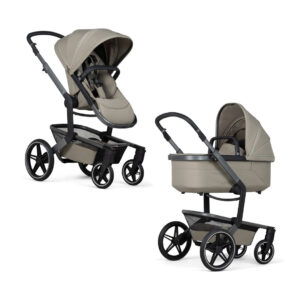
The Joolz Day5 is designed with a carrycot for the first few months and a stroller seat for the next stage of your baby’s development.
According to the manufacturer’s official instructions, the following limits apply:
The Joolz Day5 stroller seat is intended for babies aged six months and older, regardless of how well they can already control their head.
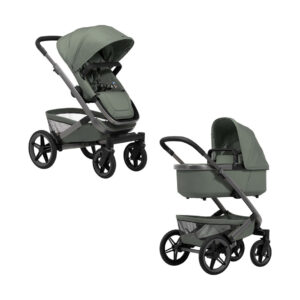
The Joolz Geo5 also includes a carrycot for newborns and a stroller seat for the next stage.
According to the manufacturer’s official instructions, the following limits apply:
The Geo5 stroller seat is also not intended for babies younger than six months.
With both models, moving to the stroller seat is an important milestone that should be guided by your baby’s development and the manufacturer’s recommendations.
Babies often fall asleep during walks, even after they have started using the stroller seat.
If your baby falls asleep, make sure the seat is adjusted according to the manufacturer’s instructions, your baby is properly secured and remains supervised. Also check that their head does not fall forward and that their airways remain clear.
A stroller seat is not a substitute for a safe sleeping surface. For regular or longer periods of sleep, a flat, firm surface designed for infant sleep is more suitable.
Moving from the carrycot to the stroller seat is one of those little milestones that reminds us just how quickly our babies grow. Suddenly, they become more interested in their surroundings during walks, eagerly watching what is happening and discovering the world around them.
For many babies, the transition happens at around six months of age, while taking their individual development and the stroller manufacturer’s recommendations into account.
Every child develops at their own pace and soon shows what they prefer during walks. Whether that means looking at mum and dad or exploring the world while facing forward, what matters is making those shared walks enjoyable for everyone.